
We walk into a consultation expecting everything to run smoothly. The room is ready, the clinician is prepared, the first patient is waiting: the process feels seamless.
But this apparent simplicity is an illusion.
Behind every consultation lies a complex system of organisation, preparation, and teamwork that most patients never see. When it works well, it enables good care. When it doesn’t, it quietly undermines it. Consultations don’t fail only because of how we think—they also fail because of what happens before we even meet the patient.
In the previous blog posts (Blog Posts), I explored how language and structure shape—and sometimes constrain—clinical thinking. But even the most skilled, adaptive clinician cannot deliver effective care if the system around the consultation is not working.
In this post, I explore the “invisible orchestra” behind every consultation: the systems, preparation and teamwork that shape care long before the clinician and patient meet.
The Invisible Orchestra
Preparation begins the moment a referral is made. Patients enter the system in different ways—self-referral, professional referral, screening programmes, or ongoing care pathways.
From that point to the consultation itself, multiple processes must align. Administrative and clinical teams coordinate bookings, prioritise cases, communicate with patients, and ensure the right staff, space, and equipment are available.
This is the unseen machinery of healthcare.
When it functions well, it creates the conditions for effective clinical thinking. When it fails, it sabotages the consultation before it even begins—through missing information, miscommunication, inappropriate timing, or poor coordination.
From Referral to Appointment
The goal is simple but high-stakes: match the patient’s needs with the right professional, in the right setting, at the right time.
An ophthalmology appointment requires specialist equipment; a mental health consultation requires privacy and time.
This is not just a scheduling task—it is a clinical one, and so much depends on getting it right.
When the system goes wrong, the consequences are immediate and lasting for both the patient and the professional, who has to deal with the fallout.
Pathways of Care
Consultations take many forms depending on urgency and need—emergency care, elective clinics, one-stop pathways, screening programmes, or in-patient and home-based reviews.
Each pathway is designed to meet a specific purpose. But in reality, variation, complexity, and system pressures mean these pathways do not always function as intended.
When teams are dysfunctional, or pathways are unclear or poorly coordinated, patients experience delays, duplication, and fragmented care, leading to confusion and undermining trust, making clinical care more difficult.
Remote and Face-to-Face Consultations
Remote consultations have become an important part of modern care, improving access and efficiency in many situations.
However, they also introduce new challenges. Communication can be limited, non-verbal cues may be missed, and technical or environmental issues can disrupt the interaction.
Face-to-face consultations retain unique strengths in building rapport and understanding complexity—but they too depend on the system around them being well organised.
The effectiveness of either approach depends less on the format itself and more on how well the consultation has been prepared and supported.
The Power—and Fragility—of Teamwork
The clinician may lead the consultation, but they are only one part of a much larger system. Nurses, allied health professionals, administrators, porters, cleaners, and managers all contribute to patient care.
When teams function well, care is safer, more efficient, and better coordinated—particularly in complex cases.
But teamwork is fragile.
Breakdowns in communication, unclear roles, or siloed working can lead to missing information, delays, duplication, and errors. These are not minor inconveniences—they directly affect patient outcomes and undermine trust.
Creating Systems That Support Care
Effective teamwork and preparation do not happen by chance—they are built deliberately.
This requires:
- Clear roles and shared goals
- Open, structured communication
- Psychological safety, where people feel able to speak up
- Respect and recognition across all roles
- Ongoing training and leadership that support collaboration
When these elements are in place, the system supports the clinician. When they are absent, the system becomes a barrier.
Why This Matters
We often focus on what happens inside the consultation—how clinicians think, communicate, and make decisions.
But thinking does not happen in isolation.
It is shaped by the system in which it occurs.
If information is missing, if time is constrained, if the wrong setting has been chosen, or if the team is not aligned, clinical reasoning becomes harder, not easier. The consultation starts on unstable ground.
Even the most skilled clinician cannot consistently deliver high-quality care in a system that does not support them.
The Takeaway
The next time you walk into a consultation—or join a video call—consider what has already happened behind the scenes.
What appears simple is the result of coordinated effort across multiple roles and systems.
Recognising this “invisible orchestra” is not just about appreciation—it is about understanding that improving care requires more than better clinicians. It requires better systems.
Make Your Opinion Count
Do you think the systems behind consultations consistently support good clinical care—or do they sometimes undermine it?
In my next post, A Good Start Matters: The Art of the Clinical Opening, the preparation is over, and it’s now time to meet the patient.
The consultation begins the moment the patient walks in — not when you ask your first question. In those critical opening moments, you’re not just gathering information; you’re shaping trust, safety, and the entire direction of the encounter.
A good start isn’t just polite — it’s clinically important.
In this blog, I discuss the hidden art of the clinical opening and how to “read the room”.
If you are a healthcare professional seeking to navigate patient consultations in a person-centred, meaningful, and compassionate way, please share my latest blog 👇 with your colleagues.
A Good Start Matters: The Art of the Clinical Opening
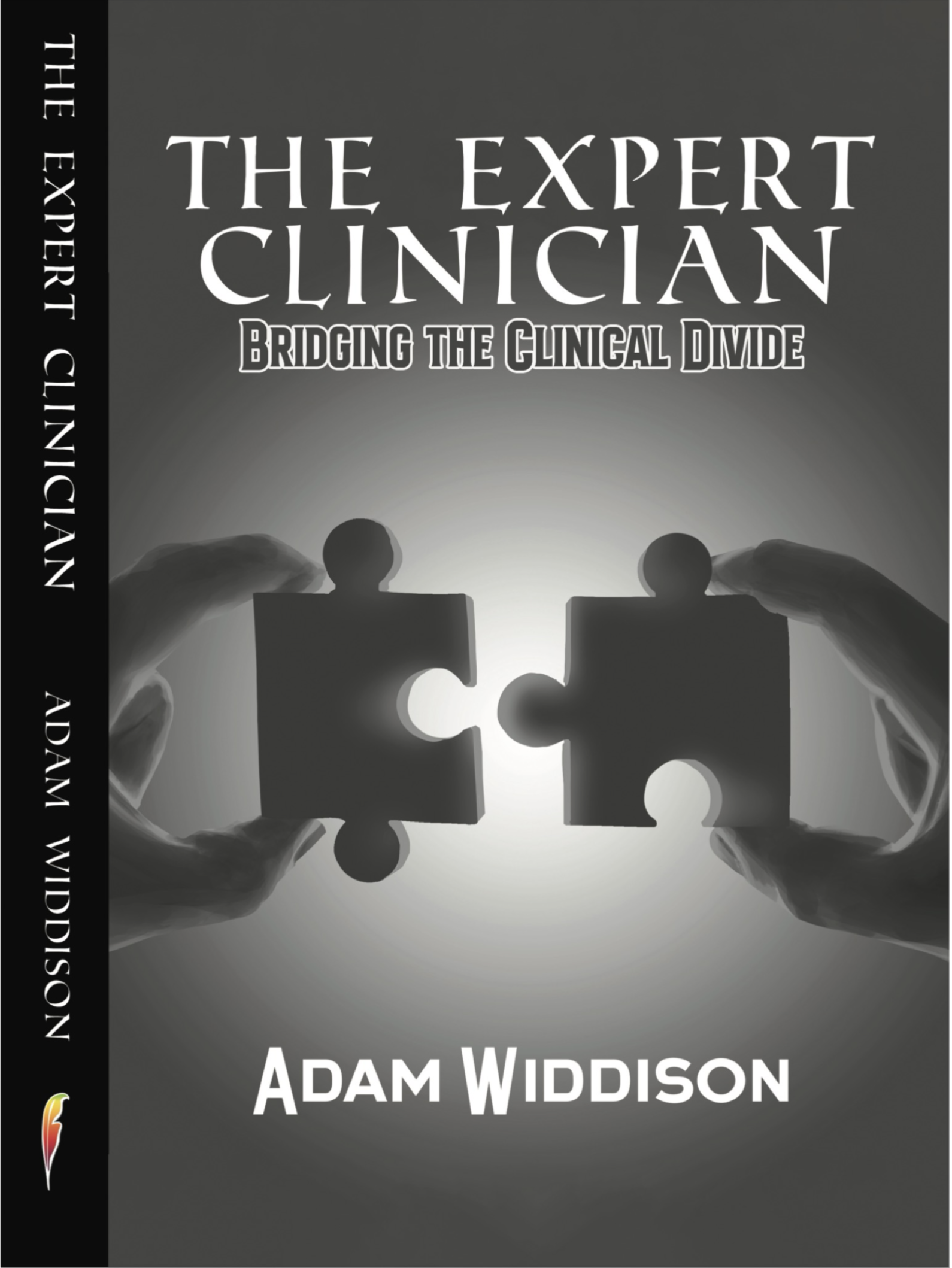
If these ideas resonate, I explore them further in my book “The Expert Clinician: Bridging the Clinical Divide.” If you want to explore a more effective, flexible, and patient-centred approach to the consultation, I invite you to buy my book. Follow the link to Amazon:

Thoughts? Join the conversation…..