
By Adam Widdison, author of The Expert Clinician
My work explores how we can shape the consultation to remain relevant to both the patient and the rapidly changing world of modern healthcare.
Throughout this series, I have maintained that providing excellent clinical care starts with understanding the individual rather than just diagnosing the disease.
We have explored how demographic characteristics, lifestyle, quality of life and functional performance all influence clinical reasoning and decision-making. Together, these factors help us understand who the patient is and how illness affects their life.
But another dimension is just as important: what they think.
Every patient enters the consultation carrying an invisible story.
They bring beliefs about what is happening to them, hopes for the future, fears about what they may hear, and expectations of how they will be treated. These thoughts rarely appear in the medical record, yet they often strongly influence the consultation.
If we fail to recognise them, we risk misunderstanding the person in front of us. If we take the time to explore them, we build trust, connect, and make genuinely shared decisions.
In this post, we’ll explore why understanding what a patient thinks is one of the most important parts of the consultation.
What Do We Mean by Beliefs, Hopes, Fears and Expectations?
Our beliefs are shaped by upbringing, culture, faith, education, prior experiences of illness and healthcare, and the information we absorb from family, friends and the media. Some are evidence-based, others stem from personal experience or deeply held values, but all influence the consultation.
Patients may believe their symptoms are trivial or serious. They may fully trust modern medicine, prefer complementary approaches, or arrive feeling sceptical because of previous experiences.
Alongside these beliefs come hope and fear.
Patients may hope for reassurance, symptom relief, a cure, preserved independence, or simply more time with family. At the same time, they may fear a diagnosis, investigations, treatment, hospitals, losing their independence, or becoming a burden to others. Often, these concerns remain unspoken unless we create the opportunity for patients to express them.
Together, beliefs, hopes and fears shape expectations. Some expectations are realistic; others are not.
Our role is not to judge but to understand. Only then can we explain, reassure, challenge misconceptions when necessary, and work with patients to make decisions that reflect both good clinical practice and their priorities.
Why It Is Important to Know What a Patient Thinks?
What a patient thinks and believes influences almost every aspect of clinical care. It shapes how they describe symptoms, interpret information and make decisions.
Hope gives patients and staff the confidence and motivation to continue. While fear can sometimes motivate action, like seeking help, it can also act as a barrier, leading to delays in care, conflicts, and mental health challenges. Expectations are benchmarks for experience and outcomes.
For example,
Two patients with identical illnesses may feel very differently because they view their situation through different lenses: one may opt for surgery because returning to work is their priority, while another may decline the same operation because they fear losing their independence during recovery.
Neither decision is irrational. Each reflects what matters most to that individual.
These differences can only be discovered by speaking to the person.
When clinicians overlook a patient’s beliefs, hopes, fears or expectations, misunderstandings are more likely. Patients may feel unheard, become anxious or lose confidence in the HCP. Even technically excellent care can fail if it does not address the issues that matter most to the patient.
Understanding what patients think strengthens trust, improves communication, and lays the foundation for genuinely shared decision-making.
A Practical Guide
Patients often tell us what they think—but not always directly.
Sometimes they say:
“I’m frightened this might be cancer.”
“I don’t want an operation.”
More often, their concerns emerge through hesitation, emotion, body language or the questions they pose.
An experienced clinician listens not only for symptoms but also for the story behind them.
Simple, open questions often reveal what matters most.
- What are you thinking at the moment?
- Is there something that’s particularly worrying you?
- What were you hoping we might achieve today?
- What concerns you most?
- What would a good outcome look like for you?
These questions do more than gather information. They demonstrate genuine curiosity, build trust, and give patients permission to discuss issues they might otherwise keep hidden.
The answers are often surprising.
A clinician may be concentrating on excluding a life-threatening diagnosis while the patient is worried about missing an important family event.
A technically successful operation may be deemed a failure by a patient who can no longer pursue the hobby that gives their life meaning.
Unless we ask, we may never know.
When Beliefs Differ from Ours
One of the greatest challenges in clinical practice arises when a patient’s beliefs conflict with those of the HCP.
Some patients trust complementary therapies. Others have cultural or religious beliefs that shape their decisions. Some are convinced they have already found the diagnosis through internet searches or on social media.
Our instinct may be to correct these beliefs immediately, but lasting change rarely begins with contradiction.
Patients are far more likely to reconsider their views when they feel respected, heard and understood.
The first task is therefore not persuasion but understanding.
Once we understand why a patient believes something, we are much better placed to explain the evidence, address misconceptions sensitively and work towards decisions that are safe, realistic and acceptable.
Respect does not always require agreement; it does require curiosity.
When the Conversation Becomes Difficult
Understanding a patient’s beliefs, hopes, fears and expectations becomes even more important when decisions are complex or the future uncertain.
In advanced illness, patients may value comfort, dignity, independence or time with loved ones more than prolonging life. Understanding these priorities helps ensure care remains aligned with what matters most to them.
The most important question is often not:
“What more can we do?”
but:
“What matters most to you now?”
Even when a cure is no longer possible, understanding what the patient thinks continues to guide excellent care.
Take-Home Message
Every patient enters the consultation carrying an invisible story.
Their beliefs, hopes, fears and expectations shape how they interpret symptoms, understand information, weigh risks and make decisions. No investigation, scan or laboratory result can tell us what matters most to the person sitting in front of us.
Only conversation can.
Throughout this series, we have explored the importance of understanding the person—their background, lifestyle, relationships, quality of life and functional performance.
Understanding the patient’s perspective brings these elements together and transforms the consultation into a genuine partnership.
Ultimately, excellent clinicians are remembered not merely because they reached the correct diagnosis.
They are remembered because patients felt understood.
I’d Love to Hear Your Thoughts
How do you explore a patient’s beliefs, hopes, fears and expectations during your consultations?
Have you ever found that understanding what mattered most to a patient completely changed your management plan?
Please share your experiences in the comments below.
In My Next Blog…
I’ll explore another essential consultation skill: The Art of Conversation
I explore why the quality of that conversation matters, how it shapes the consultation, and why understanding the person is essential to understanding the problem.
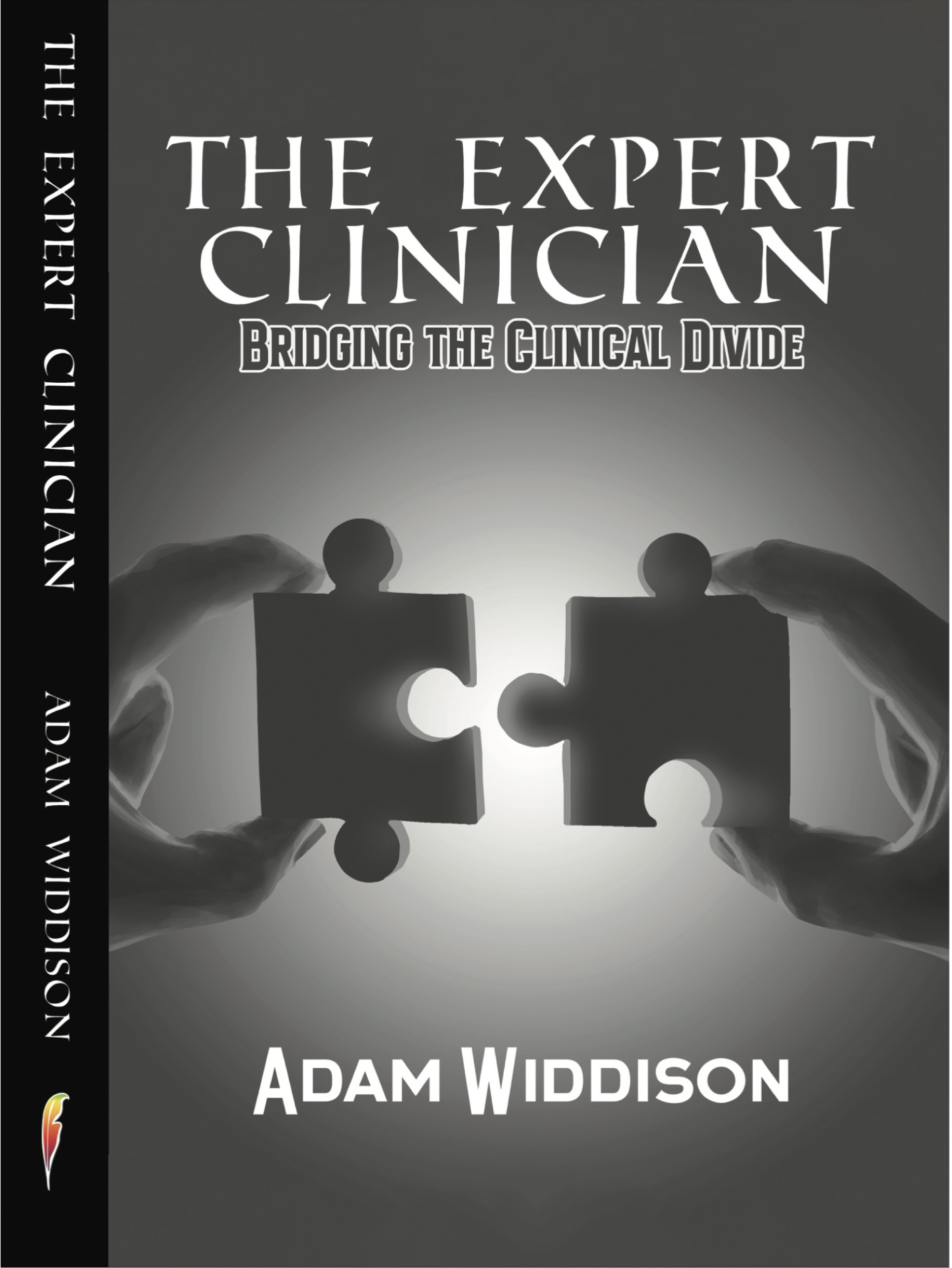
These ideas are explored further in The Expert Clinician: Bridging the Clinical Divide. If you’re interested in developing a more adaptive, patient-centred approach, you can read more here:

Thoughts? Join the conversation…..