By Adam Widdison, author of The Expert Clinician
Focusing on the Person, Not Just the Problem
In my previous post, The Art of Language, I explored why the words we choose matter—and why translating clinical knowledge into language patients can understand is essential to good clinical practice.
We cannot fully control how our words are received, but we can be intentional about the questions we ask and the experience we create.
Most healthcare professionals (HCPs) know how to ask questions. We are trained to favour open questions over closed or leading ones and to use prompts when needed. But knowing how to ask a question is not the same as knowing which question to ask and when to ask it.
The skill lies in understanding what you are trying to discover, why you need to know it, when to ask, and what you will do with the answer. Sometimes the most useful step is not to ask more questions, but to ask a better one.
In this post, I’ll explain why it’s so valuable to consider the questions we ask and how powerful a good question can be.
The Start Sets the Tone
The opening is more than a chance for the patient to settle. It is also a moment to understand their emotional state—scared, anxious, sad, angry, or reserved—and to let that awareness shape the wording, pace, and tone of what follows.
Every patient is different. Some are direct and matter-of-fact, wanting focused questions and factual answers. Others need a gentler start. A simple observation can open the door:
“You seem worried—would you like to talk about it?”
Afterwards, shape the questions around the patient’s responses rather than a predetermined sequence.
The same question can have a very different effect depending on who is asked, how it is asked and when it is asked.
Whatever the question, ask it with genuine interest and appropriate empathy, and allow the patient time to respond.
The Question Behind the Question
Before asking, pause and consider:
- What do I really want to know?
- Why do I need to know it?
- What will I do with the answer?
- Is this the best question to get me there?
- Is this the right time?
These questions apply to the patient’s questions as well. Some can be taken at face value:
“Where do I go to get this prescription?”
Others may contain a deeper concern:
“When will I get the results?”
May reflect an underlying anxiety or fear.
Answering the surface question is often appropriate, but exploring what lies beneath it can reveal information that might otherwise remain hidden:
“Is there something in particular you’re worried about?”
Questions Should Have a Purpose
A question should help move the consultation towards its agreed aim.
Sometimes an open question is the best way to start:
“What would you like to talk about?”
or:
“How can I help?”
These allow the patient to describe the problem in their own words.
At other times, a more focused question is preferable.
Once a patient has mentioned feeling sick, for example:
“Did you vomit?”
Seeks a specific detail, whereas:
“What do you mean when you say you felt sick?”
Explores meaning.
Neither is inherently superior. The purpose determines the choice.
When a consultation begins to stray, an open question can gently redirect without abrupt interruption:
“You mentioned that you felt sick. Tell me more about that.”
The important skill is not memorising different types of questions. It is recognising what the consultation requires at that moment.
Questions That Uncover What Matters
Some questions elicit clinical information. Others uncover beliefs, fears, expectations or priorities. These may be harder to ask, but they can be more important:
- “What do you think is wrong?”
- “What are you most worried about?”
- “What were you hoping we could achieve today?”
- “What is important to you?”
The answers may completely change the consultation.
An Illustrative Moment
An older patient presents again with tiredness and widespread aches. Previous tests have been normal. It would be easy to repeat the usual questions. Instead, pause and ask:
“What do you think is wrong?”
or:
“What are you worried about?”
The answer may reveal the hidden problem: the strain of caring for a spouse with dementia.
The important information was missing not because too few questions had been asked, but because the right question had not been asked yet.
Questions That Make Patients Think
Some questions are not primarily about gathering information for the clinician. They are intended to help the patient think.
Before discussing a treatment with potentially life-changing consequences, ask,
“What is important for you?”
May be more valuable than listing options immediately.
Such questions can stay with patients long after the consultation ends. They help patients consider what they want from treatment, which risks they are willing to accept, and which outcome matters most.
The question becomes part of the patient’s decision-making.
The Question That Is Not Asked
Towards the end of a consultation, a final check can reveal something that has been overlooked:
“Is there anything else that’s worrying you?”
or:
“Is there anything else we haven’t covered?”
These simple questions give the patient permission to raise something that may not have fitted neatly into the conversation.
They also send an important message:
I have time to listen to you.
Listen to the Answer
A question is only useful if we pay attention to the response.
The patient’s answer should influence what happens next. It may mean exploring something unexpected, changing direction, or deciding that another question is no longer necessary.
A useful way to think about this is:
Question → listen → think → adapt → next question.
Silence is part of this process.
Often the most important information arrives after the HCP has stopped talking.
A pause can feel uncomfortable, yet patients often use it to think, find the right words, or decide whether they feel safe enough to say something important.
Resist the urge to fill every gap.
Rapid-fire questions turn the exchange from a conversation into an interrogation.
Take-Home Message
Effective questioning is not about asking more and more questions. It is about asking with a clear purpose.
Know what you need to learn, why it matters, whether this is the right moment, and whether the question you are about to ask is the best way to get there.
Use open, focused or reflective questions according to the needs of the consultation. Pay close attention to the answer. Allow silence to do some of the work. Be prepared to change direction when the patient’s response indicates this.
When you ask questions with genuine attention, you uncover not only clinical details but also the person living with the problem.
The questions that matter most are often those that help the patient think, not merely those that gather information for the HCP.
A well-timed “What is important to you?” or a simple closing check, “Is there anything else that’s worrying you?” can reshape the encounter, deepen trust and prevent the patient from leaving unheard.
In the end, the art of asking questions is the art of focusing on the person first.
The skill is not simply knowing which question to ask; it is knowing why, how and when to ask it, and what to do with the answer.
In the next post, I will explore the skill that makes every question meaningful.
The Art of Listening.
I’d love to hear your thoughts.
Which questions do you find most useful during your consultations?
Have you ever asked a question that changed the direction of the conversation?
Is there a question you return to because it consistently reveals something important?
These ideas are explored further in The Expert Clinician: Bridging the Clinical Divide. If you’re interested in developing a more adaptive, patient-centred approach, you can read more here:
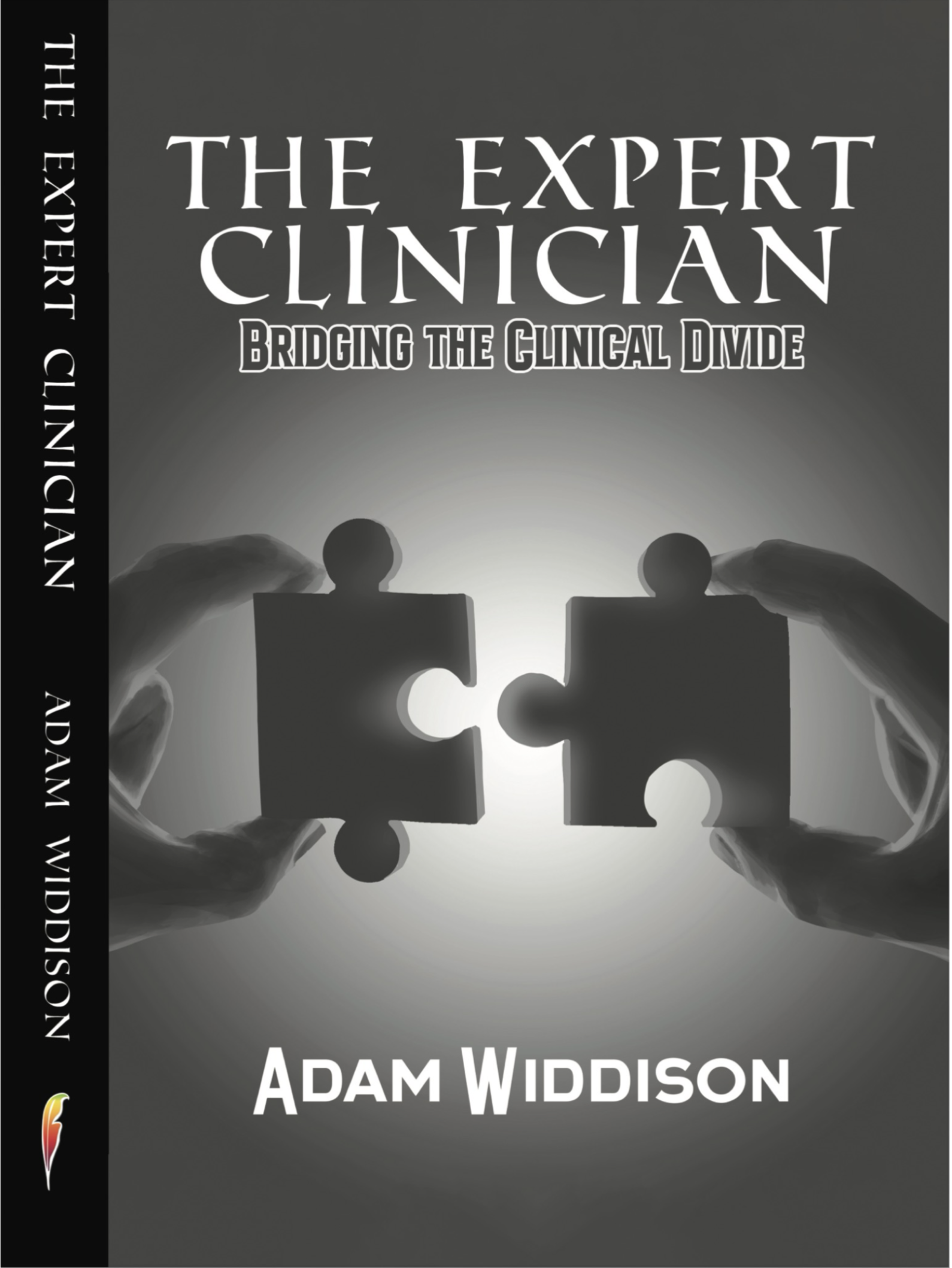
 The Expert Clinician
Thoughts? Join the conversation…..