
By Adam Widdison, author of The Expert Clinician
We are taught to ask questions, and the more we ask, the more information we gain.
We check every detail: When did it begin? What made it worse? What makes it better? And so on, taking careful notes after each answer, constantly thinking, “What should I ask next?” and worrying we might overlook something.
Questions, questions and more questions.
We often know which questions to ask and rush to ask them, but in the process we forget how important it is to listen.
Pausing, taking a breath, and truly listening are vital.
Sometimes, silence can be more powerful than a question. A conversation can hinge less on what is said and more on what we actually hear.
In my previous post, The Art of the Question, I explored the power of asking the right questions at the right time. In this blog, I explore the art of listening.
Why Is Listening an Art?
For many of us, listening is a skill; the more we practise and concentrate, the better we become.
For some, however, listening transcends a mere skill; it is an art. These people are born listeners. They possess an innate ability to encourage others to open up and share their deepest secrets. They communicate with ease, creating an atmosphere in which people feel comfortable speaking openly and honestly, often revealing information they rarely share. Such individuals excel at meaningful conversation.
Whether listening comes naturally or requires conscious effort, it remains essential to effective communication.
A Moment of Reflection
When my son was young, we learnt to play the guitar together. I, of course, practised more than he did, making sure I played the right notes.
But when we played together, I played each note as written and made fewer mistakes, whereas he made it sound like music.
Listening can work the same way.
Sometimes words are simply pieces of information, taken at face value. At other times, they carry deeper significance.
The skilled listener turns what is heard into something more meaningful, just as my son turned notes into music.
What is the Aim of Listening?
Hearing is passive; we have no choice in what we hear. Listening is different. It is an active process that demands attention and effort.
In a consultation, the purpose of listening may vary.
Sometimes we listen to gather accurate information for diagnosis and decision-making. At other times, we listen to understand the patient’s concerns, expectations, beliefs, or priorities.
We may listen to build trust, show respect, or demonstrate empathy.
Whatever the purpose, good listening aims to foster understanding and meaningful connection.
To achieve this, we need to listen not only to the words themselves but also to their context and meaning.
Listen Beyond the Words
Meaning is not always contained in the words alone.
Tone, pace, volume and pauses can shape how a message is understood. Facial expressions, posture and other non-verbal cues may reinforce what is said—or suggest that something else is going on.
But these cues are not always easy to interpret.
A patient who avoids eye contact may be anxious, uncomfortable or simply communicating in a way that is natural to them. Folded arms may indicate discomfort—or simply be a comfortable position.
We should notice these signals without assuming we know what they signify.
When something seems inconsistent, the safest response is often to check rather than to interpret.
Most importantly, we should listen for what goes unsaid.
Sometimes a pause, a hesitation, or a change in tone tells us there is more to explore.
Listening and Questioning Go Hand in Hand
Listening creates space for good questions.
A pause can feel uncomfortable, particularly when we are aware of time. But patients often use silence to think, find the right words, or decide whether they feel safe enough to say something important.
The patient’s response influences what happens next. It could confirm our expectations, prompt further questions for clarity, or even alter the entire course of the consultation.
A useful way to think about this is:
Question → listen → think → adapt → next question.
Avoid barriers and “internal noise”
Listening is easier when no barriers are present.
Some are obvious: environmental noise, poor acoustics, telephone interference or language difficulties. Others are less visible.
The most common invisible barriers are cognitive: selective hearing, false assumptions and premature conclusions. We may start formulating our next question before the patient has finished answering. We may try to solve the problem before we have heard all the evidence.
Sometimes our expectations create “happy ears”: we hear what we want or expect to hear rather than fully engaging with what is actually said.
Sometimes we are preoccupied with the clock, an urgent task, or something happening in our own lives.
Tiredness, hunger, stress, anger, defensiveness, prejudice and preconceived ideas can all influence what we hear and how we interpret it.
This “internal noise” can affect not only listening but also our subsequent decisions.
Awareness is the first step towards reducing these barriers.
Simple measures can help:
- Use an interpreter when language is a barrier.
- Minimise external noise and distractions.
- Check that hearing aids and other aids are working.
- Create a comfortable environment.
- Speak clearly and at an appropriate pace.
- Avoid jargon and unexplained terminology.
- Most importantly, give the patient your full attention.
Take Home Message
We can’t avoid hearing things, but we don’t necessarily listen.
When we truly listen—when we set aside our next question, quieten the internal noise and give our full attention—we create the conditions for connection, trust and genuine understanding.
The patient feels heard, not merely questioned.
In that moment, listening becomes more than a clinical skill; it is an act of care.
The most powerful outcomes often arise not from the precision of our questions, but from the quality of our silence and the depth of our attention.
By practising the art of listening, we transform routine encounters into meaningful exchanges and offer the other person the rare experience of being fully heard.
Sometimes a conversation is not simply about what is said or heard, but about what is experienced.
If you want to learn more about the power of silence read Andrea’s blog:
I’d love to hear your thoughts.
Do you find listening easy?
How do you make sure you listen?
Have you ever discovered something important simply by stopping and listening?
Clinical knowledge matters. But so does understanding what a patient is feeling — and recognising the emotions we bring into the consultation ourselves.
In my next post from The Art of the Conversation series, “Beyond Words: Understanding Emotion”, I explore how emotional intelligence can change the way we connect with our patients. From staying calm under pressure and noticing the unspoken signs of fear, grief, or frustration to creating space for patients to say what they’re really feeling, we explore why the human side of a consultation matters as much as the clinical facts.
Click the link to find out more – “Beyond Words: Understanding Emotion”, and if you like my post please share it with your colleagues.
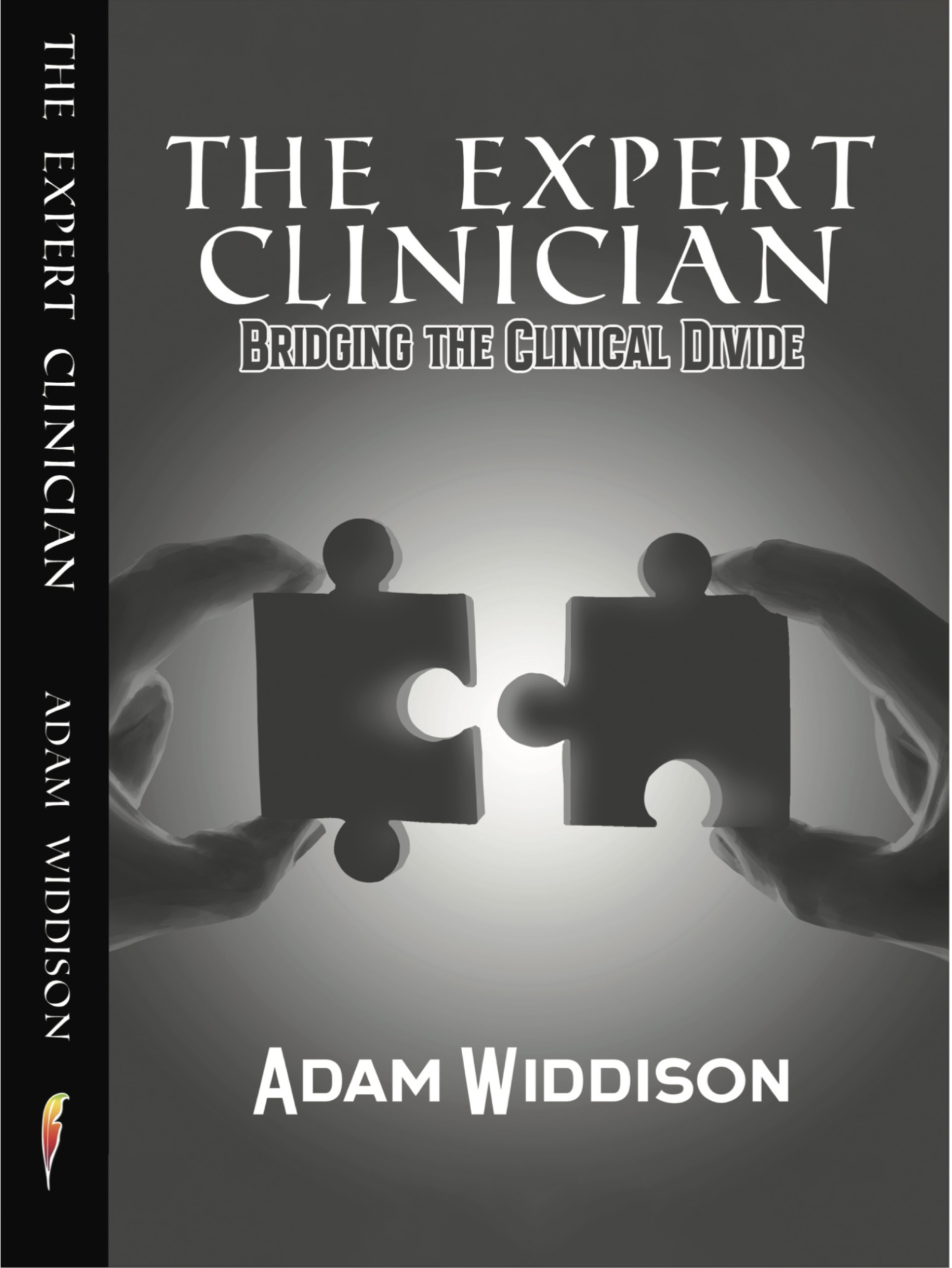
These ideas are explored further in The Expert Clinician: Bridging the Clinical Divide. If you’re interested in developing a more adaptive, patient-centred approach, you can read more here:

Thoughts? Join the conversation…..