
Transforming Clinical Practice Through Meaningful Consultations
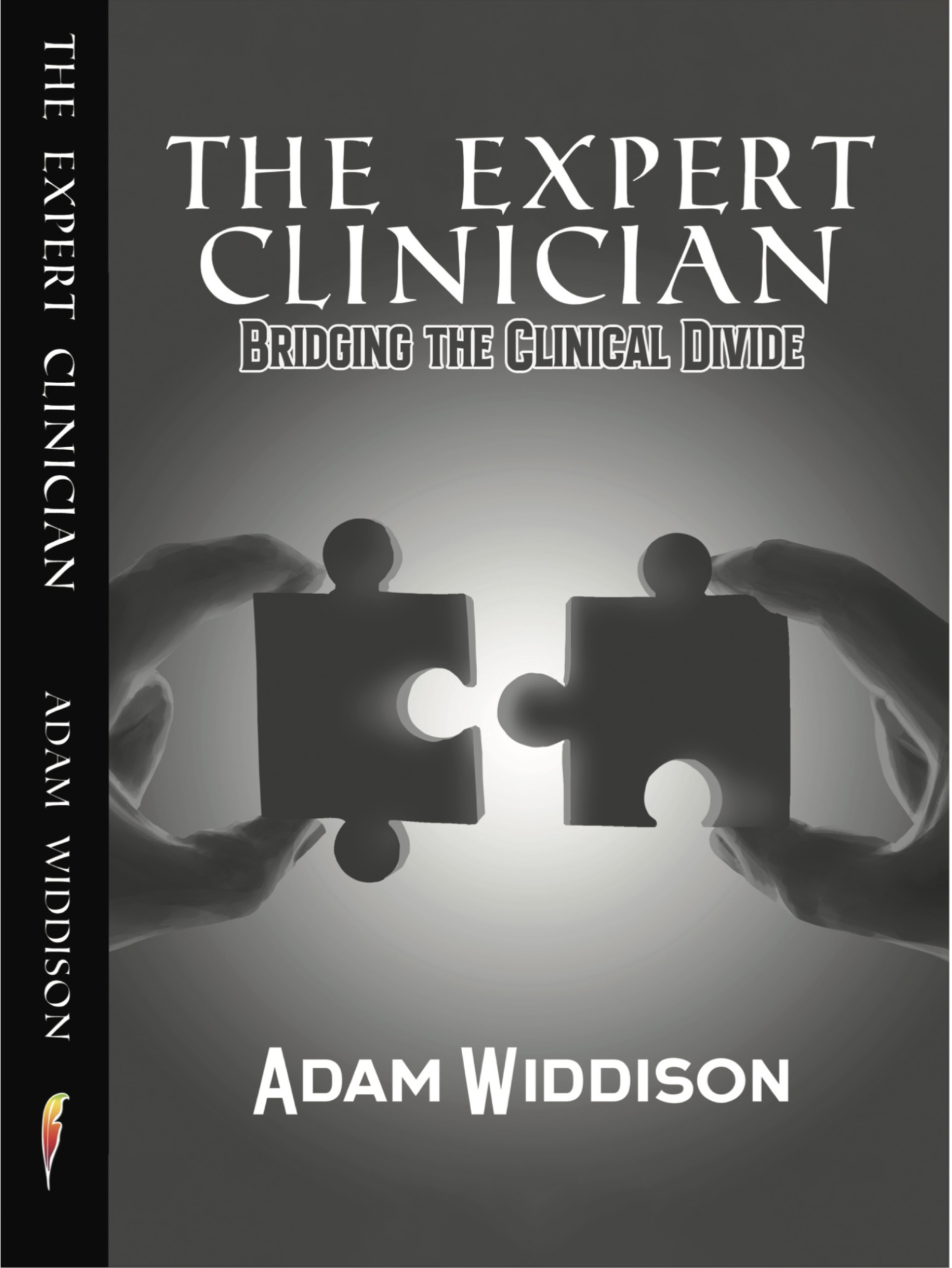
Hello, I’m Adam Widdison, the author of The Expert Clinician. This blog helps healthcare professionals (HCPs) navigate patient consultations with greater compassion, confidence, and effectiveness.
This is the first post in an ongoing series, with new articles published most weeks.
My mission is simple: to help you become a more compassionate, caring, confident, and effective HCP—one consultation at a time.
I look forward to sharing practical insights and tips that will enhance your practice and enrich the care you provide.
In this, my first blog post, I want to emphasise the importance of the clinical consultation in the care pathway and explain the clinical paradox.
I believe the consultation is truly the cornerstone of patient care, and understanding its importance is vital to fostering meaningful connections with those we serve.
What’s the purpose of the consultation?
The consultation is a vital moment that brings you and your patient together.
It’s far more than a medical exchange—it’s an opportunity to build a genuine connection, meet key people in their lives, such as partners or family members, and truly understand their story.
By listening attentively, gathering essential information, and acknowledging their concerns and experiences, you create space for collaboration. You share your insights, work towards an accurate diagnosis, and co-create a personalised management plan.
Most importantly, this process strengthens the HCP–patient bond, laying the foundation for effective care and healing.
What happens presently?
Traditionally, trainee clinical HCPs are instructed to take a thorough history and conduct a detailed physical examination.
This foundational approach encourages critical thinking, formulation of diagnoses, and development of an appropriate management plan.
However, many consultations today feel more like a checklist than a genuine conversation.
There’s increasing dependence on guidelines and AI-powered diagnostic tools that rely on complex, often opaque algorithms.
The Impact of Medical Advances on the Consultation
Advances in guidelines, online tools, tests, and treatments have undoubtedly improved many aspects of patient care. Yet people and their health challenges are complex: patients come from diverse demographic, ethnic, social, and cultural backgrounds and often live with multiple conditions.
No guideline or algorithm can fully capture this individuality, and care planning and management are increasingly complex.
Moreover, not everyone is comfortable with online tools or chatbots, and the information they provide can sometimes be incomplete or unclear. Overlooking key details can lead to misdiagnosis, inappropriate therapy, or false reassurance that delays necessary care.
As diagnostic aids, routine tests, and management options have proliferated, many HCPs and patients have perceived the value of the consultation as declining.
This has created a concerning cycle: reduced perceived value leads to less engagement and learning among HCPs, ultimately impacting the quality of care.
However, the effectiveness of any tool or treatment ultimately depends on its use with the right patient, at the right time, and for the right reasons.
This is why using the consultation to place the person at the centre of their care remains essential.
The Importance of the Consultation
The consultation is the space where we ensure that care is not only clinically necessary but also truly aligned with the patient’s needs, values, and wishes.
Our role extends beyond medical decisions. It involves forming genuine, well-informed opinions and guiding shared decision-making with compassion.
While accurate diagnosis and treatment matter, we are caring for people, not just complaints. Tests and treatments must be not only indicated but also appropriate, relevant, and timely.
This human connection—built through listening and understanding unique experiences—is best nurtured during the consultation itself.
Take-Home Message
The consultation is a vital moment that brings you and your patient together.
The human-human interaction—where connection, empathy, understanding, insight and judgement converge—remains fundamental to ensuring modern healthcare is better patient care.
The clinical paradox lies in the startling reality that, even as AI, diagnostic tools, and management aids become more widely available and relied upon, and the range of available treatments increases, the consultation is now more important than ever.
The aim of this blog is to rekindle compassionate, thoughtful dialogue in clinical practice so that every consultation remains purposeful and enriching for both patients and HCPs, and every HCP recognises and champions the essential role of the consultation in delivering outstanding patient care.
Thank you for reading the first post in The Expert Clinician series.
I’d love to hear your thoughts, experiences, and challenges in the comments.
What aspects of the consultation do you find most rewarding or difficult?
Do you think the perceived value of the consultation is in decline?
Let’s continue the conversation and grow together as compassionate, effective HCPs.
In my upcoming blog post, ‘Outdated Words, Outdated Thinking,’ I explore the question:
“What if we’ve been using the wrong words in medicine for decades?”
We instruct healthcare professionals to “take a history” and record a “presenting complaint.” However, patients aren’t simply complaining, and consultations are not about “taking” anything; they are about Learning, Understanding, and Interpreting.
“Are these just words, or do they carry significance?”
I propose that outdated terminology subtly influences our mindset and hampers our ability to connect with patients because language does more than describe clinical processes—it’s intertwined with how we think and interact.
Read the full blog and join the conversation 👇
Outdated Words, Outdated Thinking…
If you want to explore a more effective, flexible, and patient-centred approach to the consultation, I invite you to buy my book. Follow the link to Amazon:
A version of this article entitled “The Clinical Paradox” was first published in The American Journal of Medicine 2024;137(11). DOI: 10.1016/j.amjmed.2024.06.009. To read the article, follow the link: https://www.amjmed.com/article/S0002-9343(24)00399-1/fulltext
For a list of my latest blogs, follow the link 👉 My Posts

Thoughts? Join the conversation…..