The Path to Patient-Centred Consultations

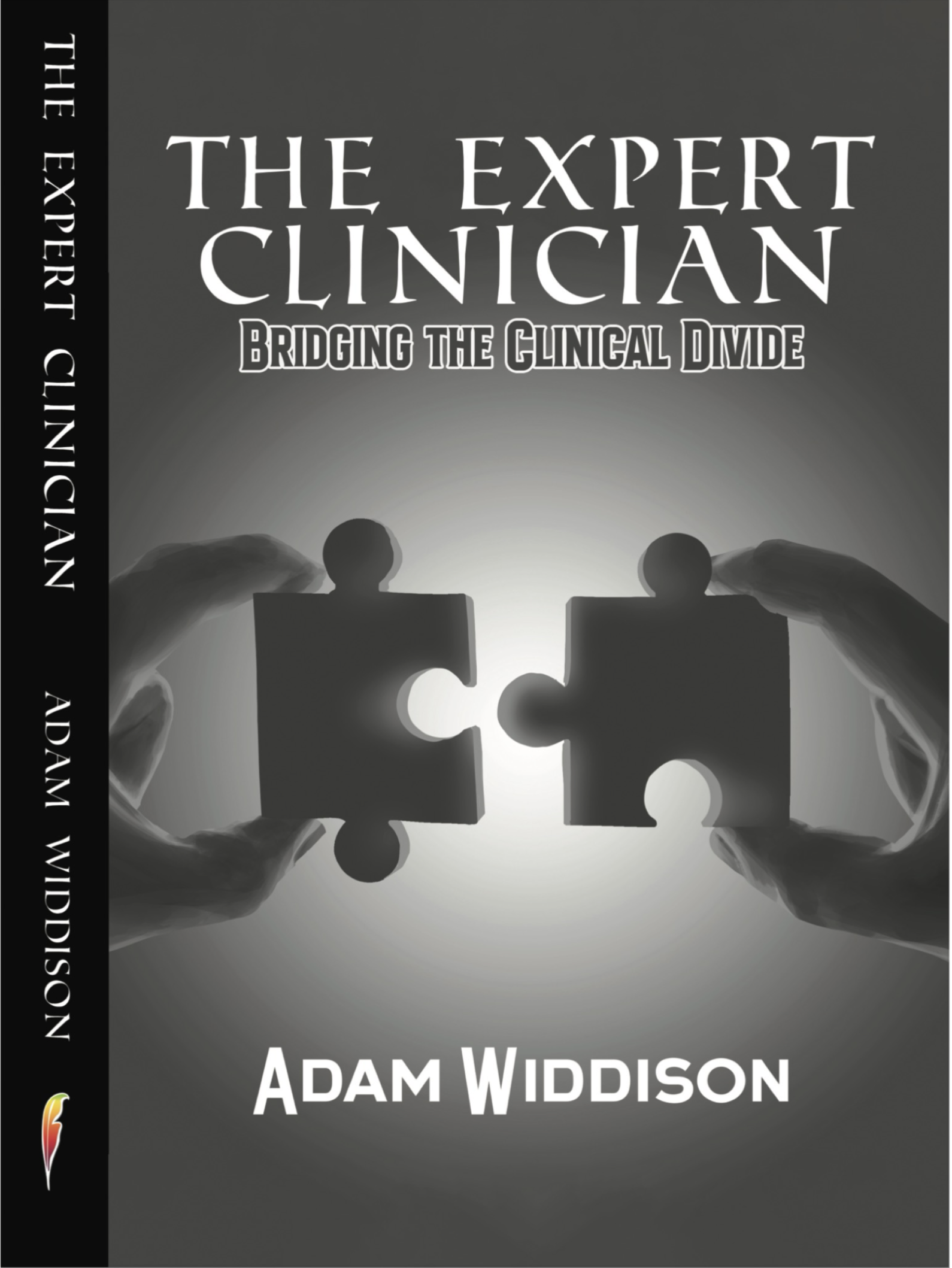
I’m Adam Widdison, author of The Expert Clinician, where I explore how clinicians think—and how we can sharpen that thinking in modern practice.
In a previous post, Outdated Words, Outdated Thinking, I challenged traditional clinical terminology, moving away from phrases such as “taking a history” or “presenting complaint” towards language that reflects active understanding and patient-centred thinking.
If that post challenged the words we use, this one challenges the structure within which those words sit.
Breaking the Script: Why Personalised Consultations Matter Now
Modern clinical practice is more complex than ever. Time is limited, patients present earlier with less well-defined symptoms, and multimorbidity is increasingly the norm. Patients are informed, expectations are higher, and resources remain constrained. At the same time, as AI takes on routine tasks, the clinician’s value lies increasingly in nuanced judgment, adaptability, and human connection.
Yet despite this, many clinicians still work within a traditional “history and examination” framework—a rigid structure that does not reflect how real consultations unfold. When the framework fails to support our thinking, it risks distorting reasoning, obscuring priorities, and ultimately compromising care.
In The Expert Clinician, I advocate a flexible, patient-centred approach in which the aim of the consultation is clear from the outset, and the process adapts to the patient, the context, the problem, and emerging needs.
Setting the Stage for Patient-Centred Care
Effective consultations begin before the patient enters the room. Understanding the context—whether it’s a new issue or a follow-up—and reviewing relevant background information helps the clinician approach the session with clear intent.
The opening moments matter. A calm, respectful introduction establishes trust, confirms key details, and creates an environment in which patients feel comfortable sharing what matters most. From the outset, the clinician should form an initial impression and align the consultation’s focus with the aims, the patient’s concerns and the clinical context.
This stage should never feel scripted—it should be responsive, purposeful, and tailored.
Moving Beyond the Rigid Script
The traditional linear model—collect all the information first, then consider diagnosis and management—appears logical but is fundamentally flawed. It is often inefficient and disconnected, and it constrains critical thinking. By artificially separating evidence from interpretation, clinicians tend to slip into a descriptive mindset that hinders active problem-solving.
Consultations are not one-size-fits-all encounters—they are dynamic interactions that adapt to each patient’s needs, context, and the information that emerges. The goal is a clear, patient-centred outcome aligned with what matters most to the patient.
Clinically, reasoning is not linear; it is iterative. Every question should have a clear purpose: to learn, to understand, to clarify, to prioritise, or to guide examination or management. The examination should not be routine or exhaustive but targeted—driven by the patient’s story and the clinician’s evolving understanding.
Questions, examination, and emerging hypotheses should continually inform one another. When data collection is separated from interpretation, it encourages checklist-driven thinking and weakens problem-solving.
Equally, compartmentalising information into rigid headings fragments the clinical picture. Important connections are missed, key negatives are overlooked, and reasoning becomes unclear—often leading to unnecessary investigations rather than confident decision-making. This matters now more than ever, as patients often present earlier with less defined features and increasing multimorbidity.
Patients, meanwhile, want more than data collection. They expect their concerns, priorities, opinions, lifestyle, and circumstances to shape the consultation. Without this, opportunities for truly personalised care are lost.
The Path Forward: Adaptive Thinking
It’s time to move beyond an outdated format. What is needed instead is an approach grounded in adaptive thinking—in which clinicians respond in real time to what matters most, integrate information as it emerges, and apply appropriate clinical reasoning and decision-making tools.
Flexibility ensures the consultation is managed as a dynamic process, shaped by the patient and the information rather than constrained by a template. This empowers clinicians to deliver high-quality, patient-focused care in a complex and evolving clinical environment.
Make Your Opinion Count
Do you think the traditional history-and-examination format supports how you actually think during consultations—or does it sometimes constrain it?
In my next post, ‘The Invisible Orchestra’, I’ll set the scene for the consultation, emphasising the importance of the systems, preparation, and teamwork that make it all happen, almost as if by magic.
If you are a healthcare professional seeking to navigate patient consultations in a person-centred, meaningful, and compassionate way, please share my latest blog 👇 with your colleagues.
The Invisible Orchestra – The System Behind Every Consultation
These ideas are explored further in The Expert Clinician: Bridging the Clinical Divide. If you’re interested in developing a more adaptive, patient-centred approach, you can read more here:

Thoughts? Join the conversation…..