
By Adam Widdison, author of The Expert Clinician.
My work explores how healthcare professionals (HCPs) think — and, more importantly, how we can sharpen that thinking in the high-pressure reality of contemporary practice.
In my previous posts, 👉A Good Start Matters: The Art of the Clinical Opening, and The Invisible Orchestra: The System Behind Every Consultation, I explored how preparation, first impressions, and the opening moments of a consultation shape trust, communication, and clinical thinking.
Every experienced HCP knows the routine. At the start of a consultation, you instinctively map out your goals: adapt your focus, refine your questions, and look for signs that will guide you towards a diagnosis and a management plan.
In other words, the start is the launchpad for asking questions or seeking signs to understand the problem.
That is the traditional clinical playbook.
But with experience, most HCPs come to realise something far more important: even the best attempts to make a diagnosis and develop a treatment plan are difficult if you have not first established a strong working relationship with the person in front of you.
Establishing a strong working relationship begins with connection.
In this blog, “Connection Matters”, the first in a series on the theme “Establishing a Working Relationship”, I explore why connection is not a “nice-to-have,” but one of the most powerful clinical tools we have. Its significance extends far beyond the initial exchange; it supports the entire process.
Other posts in this series on “Establishing a Working Relationship” are —
Empathy: “I Want to Know How You Feel”
Impressions and Perceptions: What Patients Think Often Matters More than Reality
Confidence, Trust and Respect: The Three Pillars of a Successful Consultation
Managing Issues, Conflicts, Barriers and Concerns: How to Get a Consultation Back on Track
Why Connection Is Your Most Powerful Clinical Tool
Patients are far more than collections of symptoms. They arrive carrying fears, beliefs, past experiences, expectations, and personal stories that shape how they perceive you, your advice, and the healthcare system itself.
When patients like you, they engage more actively and feel more connected. When they trust you, they open up and share honestly. And when they respect you, they’re much more likely to follow your recommendations. Building this kind of relationship makes a big difference to the care they receive.
Connection changes the entire consultation dynamic.
A strong working relationship transforms a routine appointment into a safe space where honest communication becomes possible. Patients feel secure enough to share sensitive information, voice concerns openly, and participate meaningfully in decision-making.
This relationship acts as a facilitator: improving communication, strengthening cooperation, and increasing the likelihood of reaching an accurate diagnosis and an effective management plan.
Without it, patients may shut down, withhold information, or leave feeling unheard and dissatisfied — undermining not only the consultation itself but potentially the entire care journey.
A Relationship Is Always a Work in Progress
A therapeutic relationship is not a static checkbox. It is a dynamic process that evolves throughout the consultation and the patient journey.
Keep the Patient Front and Centre
Patients need to feel heard, valued, understood, and reassured that their concerns matter and that help is available.
For many patients, a positive working relationship develops naturally. However, for vulnerable groups — including children, individuals with special needs, or those with previous medical trauma — deliberate relationship-building may need to precede meaningful clinical work.
Respect Cross-Cultural Differences
HCPs often need to navigate cultural differences that shape beliefs, values, hopes, and expectations. Building a working relationship, especially with patients from minority backgrounds, depends on respecting their background, autonomy, and personal agency, preventing misunderstandings, and fostering trust. The 5-step LEARN model provides a practical framework:
L-Listen. Use open questions and listen with empathy and understanding.
E-Explain. Share your opinion,
A-Acknowledge that they may have different views.
R-Recommend. Discuss management options respecting their preferences.
N-Negotiate. Reach an agreement together.
Maintain Professional Boundaries
This relationship must always remain professional. Blurring boundaries in friendship risks compromising objectivity and clouding clinical judgment. In situations where a close personal relationship already exists, such as treating family members, referring elsewhere is often the wiser course.
Share Information: Honesty Builds Trust
Patients often seek more than treatment. They want understanding, explanation, reassurance, and clarity.
Be transparent about your assessment and reasoning. Explain the likely causes of symptoms and the rationale for investigations or treatment plans.
Importantly, if uncertainty exists, acknowledge it honestly. Patients generally trust thoughtful honesty far more than false certainty.
Practical Ways to Strengthen Connection During the Consultation
1. Before the Patient Arrives
The relationship often begins before the consultation (👉The Invisible Orchestra: The System Behind Every Consultation). A well-organised booking process and efficient communication can reassure patients and reduce anxiety before they even enter the room.
Administrative failures, by contrast, can undermine confidence even before the clinical encounter begins.
2. The First Impression
Your tone, body language, eye contact, and opening words are incredibly important. Patients often decide within moments whether they feel safe, respected, and understood (👉A Good Start Matters: The Art of the Clinical Opening). Additionally, the initial interaction may reveal issues, such as when the patient dislikes or distrusts the HCP, has had negative past experiences with health care, or resents seeing them.
3. Learn About the Person
Begin with the individual, not simply the illness.
A brief social interaction can immediately reduce tension and humanise the encounter. If the patient appears anxious, angry, or withdrawn, pause the clinical checklist and explore what may be driving those emotions ( 👉 Defusing Conflict).
Understanding the patient’s concerns, expectations, and goals demonstrates genuine interest and helps align your objectives with theirs.
4. Learn About the Person as a Patient
The clinical conversation should extend beyond symptoms alone. Explore how the illness affects the patient’s daily life, relationships, work, and emotional well-being.
Combining personal context with clinical information leads to a deeper understanding and reinforces the idea that the patient is being treated as a whole person rather than as a diagnosis.
5. Learn About the Problem
Listen actively and visibly empathetically.
Patients quickly recognise when an HCP appears distracted, rushed, or emotionally detached. Once a patient believes their HCP does not genuinely care, the clinical relationship begins to weaken immediately.
Empathy is not separate from effective clinical practice — it is central to it.
6. The Physical Examination: Navigating an Intrusive Space
Although patients generally expect a physical examination, it remains an inherently vulnerable and potentially uncomfortable experience.
Maintaining trust during an examination requires sensitivity, clear communication, and professionalism.
- Ask for permission and explain clearly.
Explain what you are doing throughout the examination and obtain consent before touching the patient. This demonstrates respect and reduces anxiety. - Demonstrate competence.
A confident, professional examination reassures patients that they are in capable hands. - Adapt to the individual
Recognise personal discomfort and cultural sensitivities. Use Chaperones appropriately to ensure safety and reassurance.
If any aspect of the examination is perceived as unnecessary, poorly explained, or inappropriately intrusive, the relationship can deteriorate rapidly.
7. Close the Conversation: Your Opportunity to Cement the Relationship
Many HCPs treat the end of the consultation as a brief administrative formality. Yet these final moments are often what patients remember most clearly.
Use them intentionally.
- Offer genuine reassurance.
- Summarise key findings clearly.
- Agree on a practical plan moving forward.
- Ensure the patient understands the next steps.
A successful consultation should leave the patient feeling more informed, more reassured, and emotionally lighter than when they arrived.
Strong conclusions create a lasting reservoir of goodwill that improves adherence, follow-up, and long-term outcomes.
Remember: your documentation matters too. Clear, accurate clinical records support continuity of care and reinforce professionalism. Poor documentation can undermine trust just as easily as poor communication.
Take-Home Message: Invest in Connection
Investing time in building rapport produces direct clinical benefits:
- Helps patients relax and communicate openly
- Gives confidence
- Builds trust
- Ensures patients feel valued and respected
- Demonstrates genuine care and commitment
- Encourages honest information-sharing
- Supports more accurate diagnoses
- Enables management plans tailored to real lives
- Improves adherence and long-term outcomes
Connection does not replace clinical expertise. It enables it.
Final Thought
The most successful consultations are rarely remembered for diagnostic accuracy alone. They are remembered because patients felt heard, respected, understood, and cared for.
That human connection remains one of the most powerful tools in contemporary healthcare.
What are your thoughts? I’d love to hear perspectives from fellow healthcare professionals.
How do you establish a connection?
Share your thoughts in the comments.
In my next blog post, I explore empathy as a clinical skill — not simply being kind, but understanding what the patient is experiencing and responding in ways that support compassion and care.
If you are a healthcare professional seeking to navigate patient consultations in a person-centred, meaningful, and compassionate manner, please share my latest blog 👇 with your colleagues.
Empathy: “I Want to Know How You Feel”
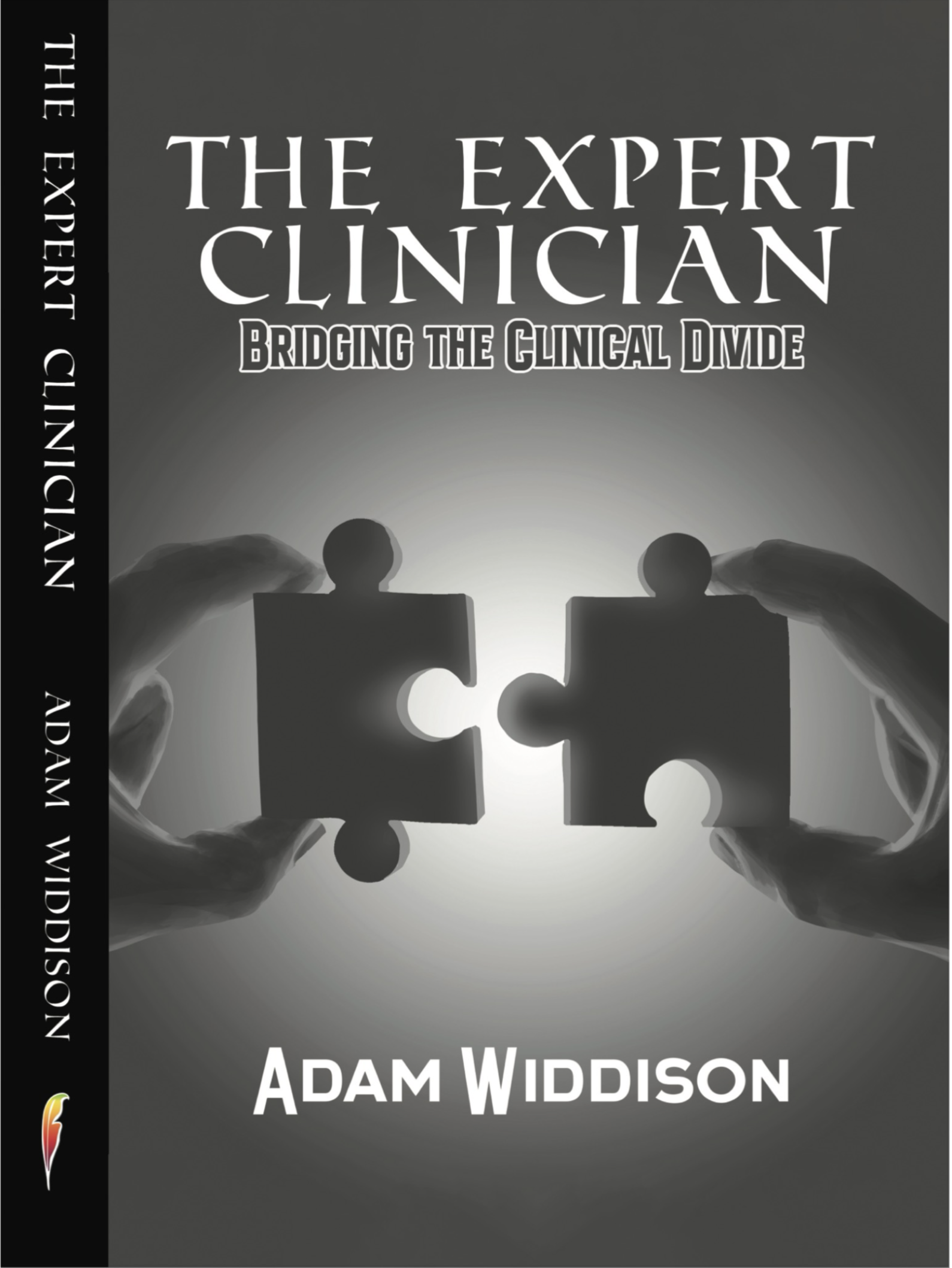
These ideas are explored further in The Expert Clinician: Bridging the Clinical Divide. If you’re interested in developing a more adaptive, patient-centred approach, you can read more here:

Thoughts? Join the conversation…..