
I’m Adam Widdison, author of The Expert Clinician. My work explores how healthcare professionals (HCPs) think — and, more importantly, how we can sharpen that thinking in the high-pressure reality of modern practice.
In my previous blog, Connection: The Secret to a Successful Consultation, I explored why a strong working relationship is essential to effective care. Without it, even the most accurate diagnosis or the most carefully designed management plan can fail.
Managing a consultation is both a science and an art. The science involves gathering, interpreting, and synthesising clinical information. The art lies in how we conduct the interaction.
Knowledge matters. But how we listen matters too.
In this post, I want to explore one of the most important skills in clinical practice: empathy.
Patients are more than a Collection of Symptoms
While teaching a group of students, I asked each to assess a patient. One saw a man with a hernia, another a young girl recovering from an asthma attack, and the third an elderly woman who had fallen at home.
Half an hour later, we discussed their findings.
The first student recommended laparoscopic repair for an indirect inguinal hernia. The second felt that regular inhalers would improve asthma control. The third suggested referral to an occupational therapist.
All three had identified the medical problem and proposed a reasonable management plan.
They knew the diagnosis, but none of them had got to know the patient as a person.
That distinction matters: patients are not merely collections of symptoms, diagnoses, or test results. They arrive with fears, worries, hopes, expectations, and personal experiences that shape how illness affects them and how they respond to our care.
Understanding those experiences is where empathy begins.
Explaining Empathy
Patients often carry emotions such as fear, anxiety, uncertainty, frustration, loneliness, or despair. These feelings matter to them and, therefore, they should matter to us.
Empathy is the ability to recognise, understand, and respond to another person’s thoughts, feelings, and experiences.
At its heart is a simple idea:
“I want to know what you feel.”
Empathy involves three essential elements:
- Recognising another person’s emotional, physical, and psychological experience.
- Understanding what may be driving those feelings.
- Responding with care and respect.
Empathy often leads naturally to compassion:
“I want to help you.”
And compassion supports care:
“I will do what I can to help you.”
Empathy is not simply a desirable personal quality. It is a clinical skill that strengthens communication, understanding, and patient-centred care.
Empathy: A Work in Progress
Every patient brings concerns into the consultation. Some worry about their symptoms. Others worry about what the diagnosis might mean, what treatment may involve, how their family will cope, and what the future holds.
Empathy opens doors that clinical questioning alone may never unlock.
Empathy is rarely demonstrated through a single grand gesture. More often, it is expressed through a series of small actions during the consultation.
Throughout, observe the patient closely. Listen carefully. Pay attention to what is said—and what is left unsaid.
Often, deeper concerns surface only when patients feel safe enough to share them.
On the other hand, patients can quickly tell when an HCP isn’t truly interested in understanding their situation.
Sense the “Emotional Weather Vane“
Create an environment in which patients feel comfortable speaking openly.
At the start of every consultation, take a moment to assess the emotional landscape: is the patient calm, worried, withdrawn, angry, frightened, or overwhelmed? (A Good Start Matters the Art of the Clinical Opening)
These emotional cues should inform your approach to the conversation.
Learn to Understand
Use open questions.
Listen actively. Allow patients time to respond: avoid appearing rushed.
Pay attention to body language, facial expressions, tone of voice, and changes in mood.
Acknowledge emotions when they are present.
Simple statements can be remarkably powerful:
“I can see that you’re upset.”
“This sounds very difficult.”
“I understand why you feel that way.”
Sometimes patients need permission to talk about difficult feelings.
Questions such as:
“How has this affected you?”
“How do you feel about that?”
“If you’d like to talk about it, I’m happy to listen.”
……. can open important conversations.
During the Examination
Physical examination places patients in a vulnerable position.
Small acts of consideration often convey empathy more effectively than words alone.
Respect privacy, dignity, and personal boundaries.
Explain what you are doing and why.
Manage the Patient as a Person with a Problem
Empathy means recognising that illness affects every aspect of a person’s life.
Consider the practical, emotional, family, occupational, and social implications of your recommendations.
Work collaboratively with patients whenever possible.
For example:
“We would normally recommend [treatment]. What are your thoughts?”
Or
“How can I best help you?”
The End is Often the Beginning
Patients often remember how a consultation ends. This sets the tone for future consultations or for the rest of the patient’s journey.
Offer reassurance where appropriate. Ensure patients understand the plan and what will happen next.
A patient who feels heard and understood is more likely to leave feeling supported and hopeful.
Empathy Is Therapeutic
The interaction with a caring and understanding HCP can be therapeutic in its own right.
Research consistently demonstrates that empathy is associated with:
- Better communication.
- More accurate diagnoses.
- Improved treatment adherence.
- Higher patient satisfaction.
- Better health outcomes.
- Greater clinician wellbeing and resilience.
Empathy helps transform patients from passive recipients of care into active partners in their healthcare journey.
Empathy Without Exhaustion
HCPs have emotions too.
Being empathetic does not mean becoming emotionally overwhelmed or absorbing every patient’s distress.
We do not need to feel the same emotions as our patients to understand them.
Healthy professional boundaries remain essential.
Empathy should enhance clinical care without causing emotional exhaustion.
Take-Home Message
Empathy is far more than a communication technique.
It is one of the foundations of patient-centred care and one of the most powerful tools available to healthcare professionals.
By helping us understand the person with the illness, empathy strengthens communication, improves care, and enriches the consultation for both the patient and the HCP.
As Sir William Osler famously said:
“The good physician treats the disease; the great physician treats the patient who has the disease.”
Before patients trust our advice, accept our recommendations, or engage fully in their care, they need to feel understood.
Empathy is where that understanding begins.
In my next blog, ‘Impressions and Perceptions: What Patients Think Often Matters More Than Reality’, I explore how patients form opinions about healthcare professionals, why those perceptions influence outcomes, and how we can shape them positively throughout the consultation.
How patients perceive us often matters more than we realise. We may be knowledgeable, competent, and genuinely caring, but if patients don’t feel confident in us, trust us, or feel heard, the consultation can fall short.
After all, patients don’t experience our intentions — they experience our actions.
If you are a healthcare professional seeking to navigate patient consultations in a person-centred, meaningful, and compassionate manner, please share my latest blog 👇 with your colleagues.
Impressions and Perceptions: What Patients Think Often Matters More Than Reality
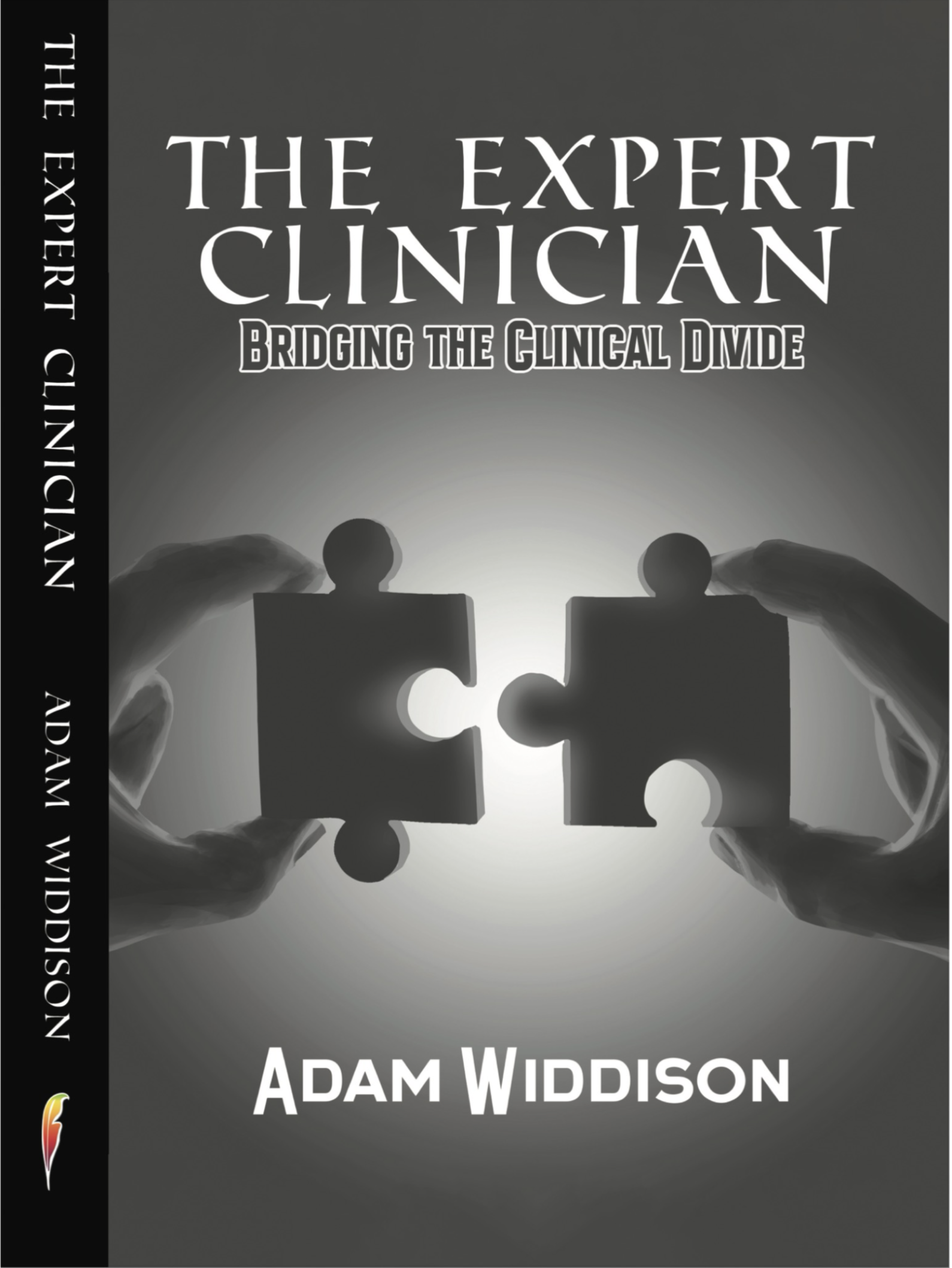
These ideas are explored further in The Expert Clinician: Bridging the Clinical Divide. If you’re interested in developing a more adaptive, patient-centred approach, you can read more here:

Thoughts? Join the conversation…..