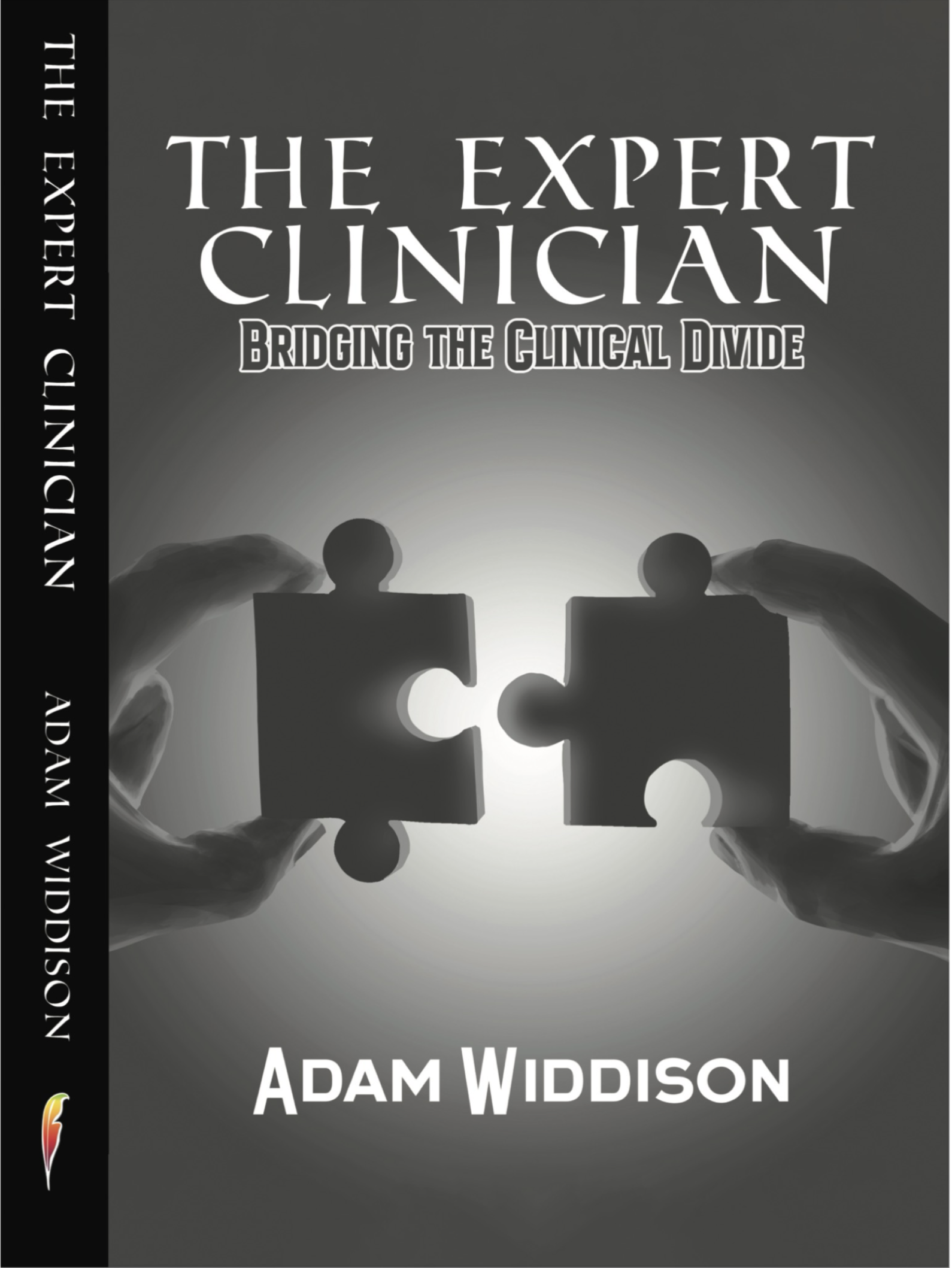
By Adam Widdison BM BCh, MA, DM, FRCS, PGCE, author of “The Expert Clinician: Bridging the Clinical Divide”.
Blog Editor: Andrea Mead.
Stop scrolling – why this blog is for you
If you are a healthcare professional (HCP) aiming to update your skills and stay current in today’s rapidly changing environment, this blog is for you. My goal is to help you navigate your patient consultations and become a more compassionate and effective healthcare professional.
Traditional history-and-examination frameworks prioritise sequential data collection over flexible, integrated thinking. The traditional format assumes clinical reasoning is linear—but real consultations are anything but: they’re dynamic, adaptive, and shaped by the patient in front of us. In modern practice, effective consultations require purposeful questioning, real-time adaptation, and a clear focus on outcomes that matter to the patient. And, as AI takes on routine tasks, our value lies in judgment, adaptability, and human connection. It’s time our frameworks caught up.
In my previous blog post, “Making the Physical Examination Count: What actually works in real consultations”, I show how to make the physical examination count in real-world settings.
Not every patient fits the textbook model—children may be shy, older adults may move more slowly, and people with disabilities or sensory differences need thoughtful adaptations.
In my latest post, “Adapting for Diversity: Tailoring the Physical Examination to Different Needs”, I show how to deliver thorough, respectful physical examinations without omitting essential elements.
From turning exams into play for kids to collaborative approaches with older adults and coordinated techniques for those who are deaf, hard of hearing, or visually impaired, you’ll find clear, actionable strategies. Learn how simple adjustments in communication, positioning, and pacing ensure every patient receives equal, high-quality care.
If you like my latest blog, 👇 please share it with your network.

For a list of previous blogs, follow the links 👇
-
Stop scrolling…. Why this blog is worth your time
-
The Clinical Paradox
-
Outdated Words, Outdated Thinking…
-
The Cracks in the Foundation
-
The Invisible Orchestra: The System Behind Every Consultation
-
A Good Start Matters: The Art of the Clinical Opening
-
Connection: The Secret to a Successful Consultation
-
Empathy: “I Want to Know How You Feel”
-
Impressions and Perceptions: What Patients Think Often Matters More Than Reality
-
Confidence, Trust and Respect: The Three Pillars of a Successful Consultation